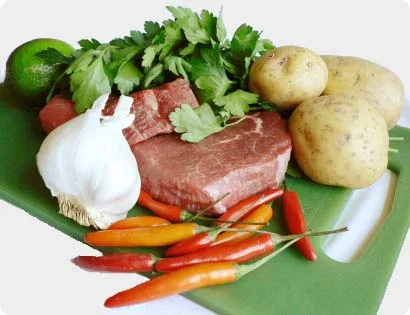
We have cooked a lot of fish lately, and with the gravlax I promised there would be more salmon to come. More will follow, but tonight I have serious red meat cravings and will just make a sirloin steak.
The eater's guide to Argentina for Dummies comes down to three key concepts: Malbec, steaks and chimichurri. Last year, when we travelled in Argentina, I came across the best bife de lomo I have ever eaten. Argentine beef is tasty and tender beyond belief, and it tastes best on the spot. Much of the restaurant food in Buenos Aires was so bound up with the feel of the city that there is little point in trying to copy it in a home kitchen anyway. I have already written about the Argentines' addiction to dulce de leche. The steak almost always came with chimichurri, a spicy, herby condiment that packs an extra punch. Nobody seems quite sure where the name comes from. I read that it may come from a Basque word meaning roughly a hotchpotch, which I think would suit a sauce in which everything is chopped small and mixed up together. The Uruguayans, I gather, consider chimichurri just as much their own. I still think fondly of the chimichurri at an Argentine restaurant in Ponce, Puerto Rico, too.
Chimichurri is still worth trying the next time you are moved to fry a proper steak at home. It delivers a blast of the exotic far more comfortably than being packed like a sardine in tourist class to the other side of the globe. It is really easy to prepare, but like all good things this sauce takes time (Doughboy is a slow food blog!). So start it a couple of days before the meat craving strikes, to let the flavours develop fully.
My dinner will be accompanied by a glass of Malbec, the perfect complement to red meat. This grape, cultivated in the Mendoza area of Argentina, makes red wines that range from rotgut to thoroughbred collector's items. I read somewhere that Malbec actually comes from Cahors in south-west France, though these days far more of it grows in Argentina than in France. Thanks to globalisation, Malbecs are available pretty much everywhere - even in the dusty corner liquor store on Broadway, just steps from our front door, whose customers are mostly our Spanish-speaking neighbours. (Oddly enough, they carry 25 different ports and more than a dozen Puerto Rican rums, but their wine selection is nothing to write home about.) Perfectly drinkable cheap Malbecs include San Telmo, Rincón Famoso and Trapiche, but if you have an investment banker's wallet, the range of prices and quality is wide.
Recipe card
Chimichurri
- enough for 2-4 steaks
- Resting a couple of days
You will need
| 50 ml | olive oil |
| 1 tbsp | white wine vinegar |
| 1 tbsp | balsamic vinegar |
| the juice of 1 lime or 1/2 lemon | |
| 100 ml | finely chopped parsley |
| 2-3 | garlic cloves, crushed |
| 1 | basil leaf, finely chopped, or a pinch of dried oregano |
| 3/4 tsp | crushed dried chile de árbol (or 3-4 tiny peperoncini) |
| 1/4 tsp | black pepper |
| salt to taste |
Method
- Chop all the solid ingredients and herbs very finely with a knife or in a mortar. It seems to be a point of pride in Argentina not to use a food processor, but decide for yourself.
- Mix with the olive oil and vinegars and pour into a glass bottle.
- Let it draw in the fridge for a couple of days until the flavours meld.
- Serve with steaks, spooned over the cooked steak at the table.
You can marinate the raw steak in chimichurri, and some people do, but I don't think it is necessary. I prefer to ladle copious amounts of it on top of the finished steak at the table.
Leave a Reply