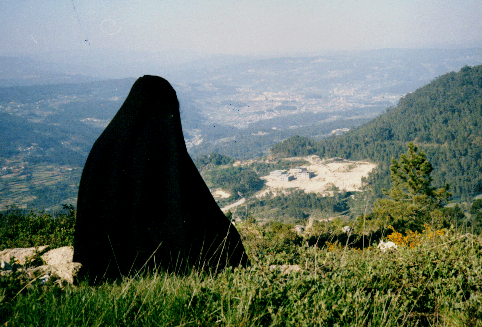
The first time I tasted this dish I was in paradise on earth. We had been exploring the Douro valley in northern Portugal, where the grapes for port are grown in one of the most dramatically beautiful landscapes in all of Europe, and then crossed the rolling mountains of the Beira Alta by car. We were too late for the midday meal, so in a surreally dodgy lunch cafe further north we were served repulsive Spam-like luncheon meat on overcooked pasta. In the early evening we drove through dense forests and along misty rivers lined with weeping willows, and ended up in a somnolent townlet so tiny it had only one restaurant. There were no menus and only one or two dinner options. A bit apprehensive, we let the lady who ran the place serve us whatever she had prepared for the night. So began a meal that belongs among my top five restaurant experiences of this new millennium.
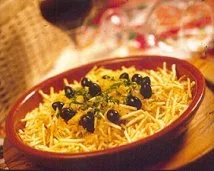
Later on we learned that the dish we ate there is not uncommon in Portugal, or among Portuguese immigrants elsewhere. Famous enough to have its own Wikipedia entry, it is called bacalhau à brás. The Swedish classic Janssons frestelse (known in Finland as Janssonin kiusaus) is clearly of shared lineage. I am a bit ambivalent about anchovies, though, and I find the Portuguese dried-cod version better amalgamated and far more delicious.
Near New York City you can get a taste of authentic bacalhau à brás in the Ironbound section of Newark. This neat working-class neighbourhood has a considerably less idyllic setting than the Beira Alta. It lies just off the airport exit of the New Jersey Turnpike, a very short distance from the scarred industrial moonscape that houses one of the most blighted urban slums in the north-east of the US. Newark is also where the nearest Portuguese bakeries I know of are, and the pastéis de nata custard tarts and guaraná soda from Seabra's, the Portuguese supermarket, have made many a Turnpike traffic jam easier to bear.
Recreating legendary restaurant meals at home is usually a pretty futile task. Supposedly I am watching my weight right now and trying to eat as healthily as possible. Too bad my cupboards are full of temptations, a pound (450 g) of bacalhau among them. Well, dried fish is not exactly unhealthy, it is just the company it keeps... eggs and oil by the bucketful. This was my first attempt at a bacalhau dish, and the result was so delicious that I could hardly believe it. It is also definitely the first time I have found myself cooking from a Wikipedia entry. I did cut down the proportion of cod to potato, because the cod of the North Atlantic have been fished almost to extinction.
Recipe card
Bacalhau à Brás
- 3-4 servings
- Soaking the cod 24 hours, changing the water 3-5 times
You will need
| 250-300 g | bacalhau (dried salt cod) |
| 500 g | potatoes, cut into matchsticks |
| 2 | onions, finely chopped |
| plenty of canola (rapeseed) or corn oil for frying | |
| 1 | garlic clove, quartered |
| 2-3 tbsp | extra virgin olive oil |
| 6 | eggs, lightly beaten |
| 1 tsp | freshly ground black pepper |
| 50 ml | chopped parsley |
| black olives |
Method
- Soak the cod for 24 hours, changing the water 3-5 times to get rid of the excess salt. When the fish has softened, check it for bones and cut it into pieces with kitchen scissors.
- Peel the potatoes and cut them into long, thick matchsticks. Rinse several times until the water stays clear, and drain in a colander.
- Heat the frying oil in a large frying pan and fry the potatoes until golden. (For this I use oils that are better suited to heavy-duty frying and cheaper than good olive oil, and bring out the flavour of the dish with good oil later on.) Lift the potatoes onto a plate lined with kitchen paper to absorb the excess fat.
- Next fry the chopped onions in the oil until lightly browned. Set them aside, and stir-fry the cod in the remaining oil.
- Heat a little olive oil in a heavy-based pot. Let the quartered garlic clove infuse the oil until golden, then remove it. Add half of the potatoes and all of the onions and cod.
- Lightly beat the 6 eggs in a bowl, season with the black pepper and pour into the pot. Stir gently over a low heat, much as you would scramble eggs. When the eggs are firm, take the pot off the heat and add the chopped parsley.
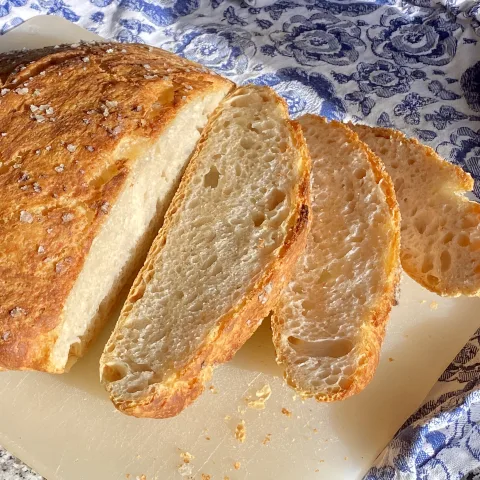
- Just before serving, add the rest of the fried potatoes so that they stay crisp. Decorate with black olives if you like, and serve at once with good crusty Portuguese bread and wine.
The meal is pretty substantial. For a few hours afterwards, don't plan on doing anything more important than taking a nap or watching one of Manoel de Oliveira's slow-moving films.
6 comments
I've always been fascinated by bacalhau but never had it! That does look incredibly delicious ... sigh!
Just another incredible post.
Here in Toronto, we are very fortunate to have several areas in the city where Portuguese cooking thrives.
I loved your account of your travels through Portugal. I hope we can hear more about it!
Hi MM, a bit nearer to you than Portugal, Macao is apparently famous for its bacalhau. Hope you get your share soon!
Ivonne, I'll be in Toronto, one of my favorite cities on this continent, in less than two weeks! I'm already looking forward to an orgy of Portuguese food... so accessible in Toronto (Newark is quite a trek from Manhattan).
Lovely story. The best restaurant meal memories always seem to be from really really simple and basic places. Mine too. You rarely hear people recalling their meals at Michelin star restaurants as the most memorable ones.
Actually Melaka has a fairly strong Portuguese community ... I wonder ...
Anyway, I've tagged you guys for an Around the World Meme ...sorry!
http://thefeastcrusade.blogspot.com/2006/03/around-world-in-meme.html
Mustekala, I'm looking forward to hearing more about your most unforgettable meals. MM, thanks so much for literally going around the world to tag us, we'll get back to this later...