One of the funny sides of travelling in warm countries is that you keep running into exotic house plants and crop plants in their natural state. Weeping figs, busy lizzies, poinsettias and bananas sprawl in the scrub by the roadside. The poinsettia, I am told, comes from Mexico in the first place, and there it grows into a bush a good deal taller than a man.
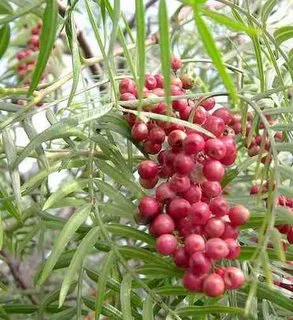
On our trip to Mexico a couple of weeks ago we went to see a pyramid in the state of Puebla that is said to be the largest in the world by volume. You would not guess it from the outside, because it looks like a grassed-over hill with a church the Spaniards built on its summit. When we climbed to the top of the Indian pyramid of Cholula, buried under turf, to look out at the volcanoes that surround the town, Popocatépetl and Iztaccíhuatl, the toe of my shoe suddenly crunched into a cluster of berries with a familiar smell: I had found the first wild pink pepper tree of my life. I rubbed one berry to pieces between my fingers, and the scent was the same as in the spice jar at home.
I read afterwards that the tree is a newcomer in Mexico. It comes from Peru, and the Spaniards brought it with them as early as the sixteenth century. Pink pepper has nothing to do with ordinary pepper - even the taste is closer to resin or dill. It is related, of all things, to the cashew nut. The skin of the dried berry is paper-thin and crumbles in the fingers, so no mill is needed. My brother, too, was crumbling pink pepper over his cabbage rolls only last week.
The salmon pasta on the Finnish food blog Pastanjauhantaa reminded me of an old favourite among my pink pepper recipes. The sauce is outrageously easy and needs no cooking at all. I allow 100-150 grams of fusilli or penne per eater, and the pasta water ought to be as salty as the Mediterranean. While the pasta boils I stir together in a bowl the light crème fraîche, the cold-smoked rainbow trout cut into thin ribbons, and the dill seeds, which go well with the resinous pepper. I drain the pasta, tip it back into the pan and pour the creamy fish mixture over it. The pan does not go back on the hob, because the sauce is not meant to cook. I just stir everything through thoroughly and let the pasta soak up the sauce for a minute or so. The pink peppercorns I crush in my fingers only over the finished plate, as seasoning and as decoration.
If you really want to make a show of the colours, you can use pasta dyed with squid ink. And a bone-dry, ice-cold rosé from the south of France might be rather a fun wine to pair with this.
Recipe card
Pasta with Pink Pepper and Cold-Smoked Rainbow Trout
- sauce for 1-2
- Sauce not cooked
- Soaking about 1 min
You will need
| 100-150 g | fusilli or penne per eater |
Fresh sauce for 1-2
| 50-100 ml | light crème fraîche |
| about 100 g | cold-smoked rainbow trout, cut into thin ribbons |
| 2 tsp | dill seeds, or 2 tbsp dill |
| 1 tsp | pink peppercorns, crushed in the fingers, for the top of the finished plate |
Method
- Boil the pasta. The pasta water ought to be as salty as the Mediterranean.
- While you wait for the pasta to cook, mix all the sauce ingredients except the pink pepper together in a separate bowl.
- Drain the pasta in a colander, tip it back into the pan and pour the creamy fish mixture on top.
- Do not put the pan back on the hob - the sauce is not meant to cook - but stir it through thoroughly and let the sauce soak into the pasta for a minute or so.
- Divide between plates. Sprinkle the crushed pink pepper over each plate as seasoning and as decoration.
Should you want a meat-eater's variation of the pasta, the cold-smoked trout can be replaced with sliced fat-free boiled or smoked ham. In that case the dill seeds are left out, and green peppercorns take the place of the pink.

1 comment
Siis voi jumalautsi miten hyvältä toi kuulostaa. Täytyy kokeilla heti huomenna 🙂